
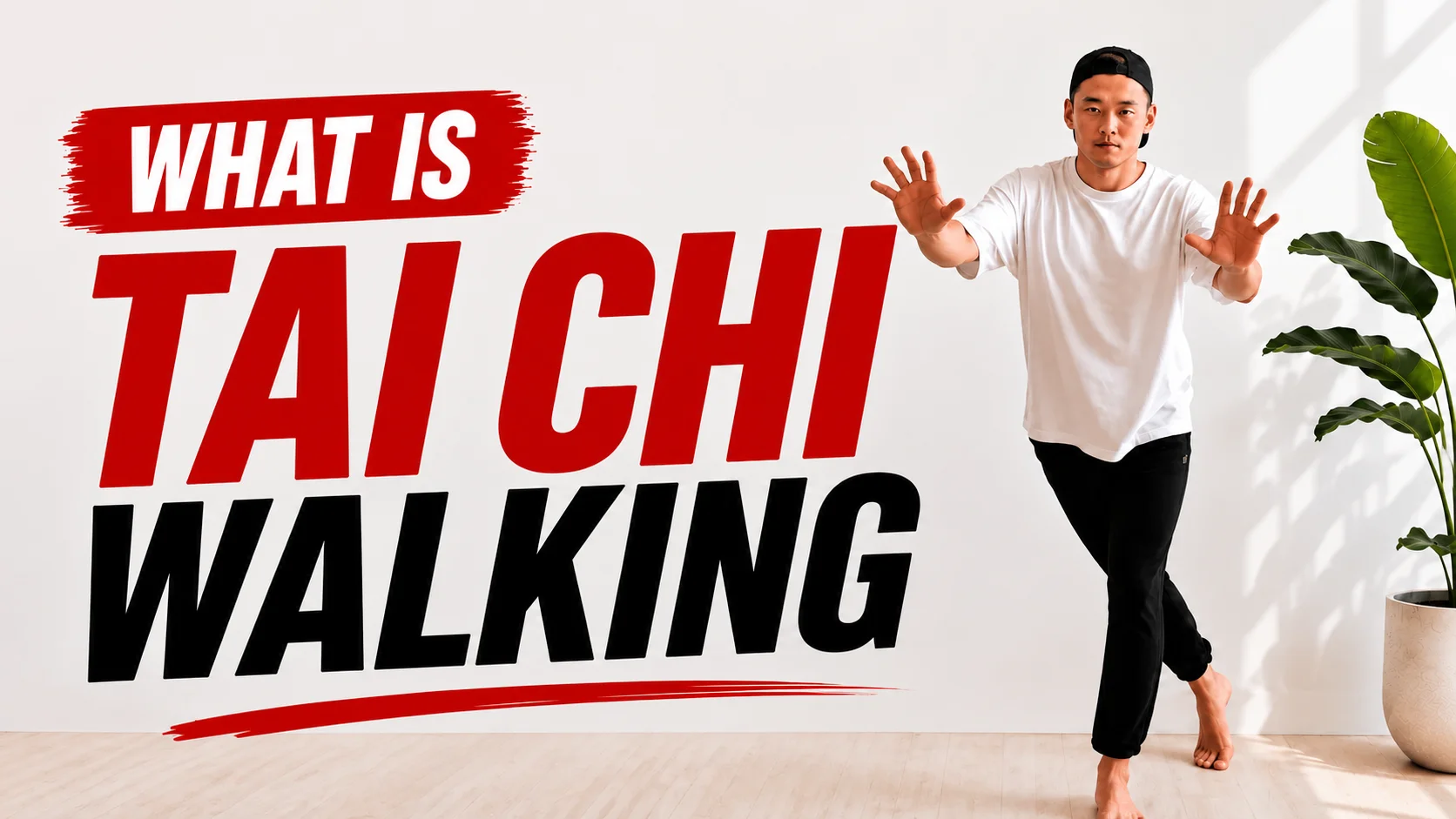
What Is Tai Chi Walking?
Tai Chi walking is a slow, deliberate way of stepping that teaches you to place the foot before fully transferring your body weight onto it.
Instead of throwing your body forward as you might during normal walking, you move with control, awareness, and a clear sense of which leg is supporting you.
At Tai Chi Hub USA, we think the easiest way to understand Tai Chi walking is not as “walking slowly,” but as learning how your body moves from the ground up.
The feet, ankles, legs, hips, waist, posture, and attention all work together. Each step becomes an exercise in control rather than simply a way to move across the room.
What Is Tai Chi Walking?
Tai Chi walking is a movement practice based on one of the core ideas of Tai Chi: clearly separating empty and full.
A “full” leg is the leg carrying most of your body weight. An “empty” foot is light enough to move and place without committing your weight to it immediately.
That distinction changes the way you walk.
Instead of reaching forward and falling into the next step, you first establish your support. Then you place the moving foot gently. Only after the foot is positioned do you gradually transfer your weight.
Think of Walking Across a Frozen Lake
One useful Tai Chi image is to imagine walking across thin ice.
You would not slam your foot down and immediately throw your weight onto it. You would place the foot carefully, feel the ground, and then gradually commit your weight.
That is a useful way to understand Tai Chi walking.
The lesson used in the source describes the foot as being placed “empty” first, followed by a gradual weight transfer. The purpose is to develop awareness instead of rushing automatically into the next step.
Tai Chi Walking Is About Feeling the Movement
Beginners often want to know exactly where every joint should be.
But Tai Chi walking does not have to begin with complicated mechanics.
Start by feeling what happens.
Where is your weight?
Which foot is free to move?
Can you place that foot without falling forward?
Can you remain upright while the weight moves from one leg to the other?
Those questions are often more useful than trying to memorize dozens of technical instructions.
How Do You Do Tai Chi Walking?
A simple Tai Chi walking drill follows this sequence:
Shift the weight. Move the empty foot. Place the foot. Transfer the weight. Repeat.
The movement should be slow enough that you can feel every stage.
Step 1: Establish Your Support
Stand comfortably and keep your head upright.
Avoid staring down at your feet the entire time. Your posture should remain natural rather than collapsing forward.
Slowly shift your weight toward one leg.
As that leg becomes fuller, the opposite leg becomes lighter.
Step 2: Move the Empty Foot
Once one foot is light, bring it forward.
Do not immediately throw your body weight onto it.
Place the foot gently.
The source lesson demonstrates several possibilities for exploring foot placement, including heel-first, flat-foot placement, and a toe or ball-of-foot-first drill. The important principle is not that one method is the only “correct” Tai Chi walk, but that you learn to feel the foot before loading it.
Step 3: Let the Foot Connect With the Ground
A useful beginner drill is:
Ball of the foot → flat foot → shift the weight.
Place the front of the foot.
Allow the rest of the foot to settle.
Then move your weight forward.
This slower process gives you time to notice what your toes, ankles, feet, and legs are doing.
Step 4: Transfer the Weight
Once the foot is securely placed, begin transferring your weight.
Do not suddenly push your entire body forward.
Let the movement happen gradually.
Eventually, the front leg becomes full and the rear leg becomes lighter.
Now the rear foot is free to move.
Step 5: Repeat Without Rushing
Bring the empty foot forward and repeat.
Tai Chi walking should feel methodical at first.
That is a good thing.
You are deliberately slowing down an action that your nervous system normally performs automatically.
Find Tai Chi Classes Near You
Tai Chi Hub USA brings Tai Chi classes from across the country into one place, making it easier to explore options by location, compare nearby classes, and discover schools or instructors you may not have found otherwise.
With more than 1,000 Tai Chi classes across the USA, the hub gives you a simple starting point for finding a class that matches your location, experience level, and goals.
Search by location, compare nearby options, and find a class that fits your needs.
Click here to find Tai Chi classes near you.
Free Online Tai Chi Walking Workouts and Guide
We offer free online Tai Chi walking workouts and a practical guide to help you learn the movements, improve your balance, and build a consistent practice at home.
Click here to sign up for free Tai Chi walking workouts and the guide.
Try a Tai Chi Walking Workout
If you want to experience these principles in practice, try our Tai Chi Walking Workout.
A guided session can make it easier to understand weight transfer, foot placement, posture, balance, and the slow, controlled rhythm of Tai Chi walking.
Click Here To Watch the Tai Chi Walking Workout and follow along at your own pace.
How Is Tai Chi Walking Different From Normal Walking?
Normal walking usually uses more momentum. Tai Chi walking deliberately reduces that momentum so you can study balance, weight transfer, foot placement, and posture.
During ordinary walking, many people move their body forward at the same time that the front foot reaches the ground.
Tai Chi walking separates those actions.
The foot arrives first.
The weight follows.
You Spend More Time in Control
One goal of the drill is to increase the amount of time you can remain controlled on the supporting leg.
That does not mean freezing in place.
It means you are not rushing to escape from one leg onto the next.
This creates more time to feel how the moving leg travels forward and how the supporting leg interacts with the floor.
What Is the Most Common Tai Chi Walking Mistake?
One of the most common beginner problems is overstriding.
People are used to moving quickly, so they reach too far with the front foot and propel the body forward.
That can make it much harder to maintain an upright structure.
Do Not Try to Take Huge Steps
A longer Tai Chi walking step is not automatically a better step.
If you reach so far that your hips have to distort or your upper body has to lean, the stride is probably too long for that particular drill.
Instead, allow your own balance to define the step length.
Move the empty foot only as far as you can while maintaining control.
The source emphasizes that excessive stride length can compromise structure, while a natural step allows the practitioner to remain upright and maintain a clearer empty-full relationship.
Why Is Weight Transfer So Important in Tai Chi Walking?
Weight transfer connects the foot to the rest of the body.
Tai Chi is not simply about moving the arms or copying a sequence of positions.
Movement starts from your relationship with the ground.
When the foot connects properly, the legs, hips, and waist can work together instead of acting as separate parts.
Movement Begins From the Ground
The lesson behind Tai Chi walking emphasizes a traditional Tai Chi idea: power and movement begin from the ground and travel upward through the body.
That is one reason foot placement matters so much.
If your foundation is uncontrolled, it becomes harder for the rest of the body to move efficiently.
Tai Chi walking gives you a simple environment in which to study that connection before adding more complex forms and techniques.
What Is Tai Chi Indoor Walking?
Tai Chi indoor walking is simply Tai Chi walking practiced in a limited indoor space.
You do not need to cover a long distance to practice the main principle.
The important part is the quality of the step.
You can practice several steps forward, stop, reset, and repeat in the opposite direction.
You can also practice the weight-transfer sequence almost in place.
How to Practice Tai Chi Walking Indoors
Clear enough space to take a few comfortable steps.
Then practice:
Shift most of your weight onto one leg.
Allow the opposite foot to become light.
Move that foot forward.
Place it gently.
Settle the foot.
Transfer your weight.
Repeat on the other side.
A short hallway or open room can be enough because Tai Chi walking is not about covering miles.
It is about studying each step.
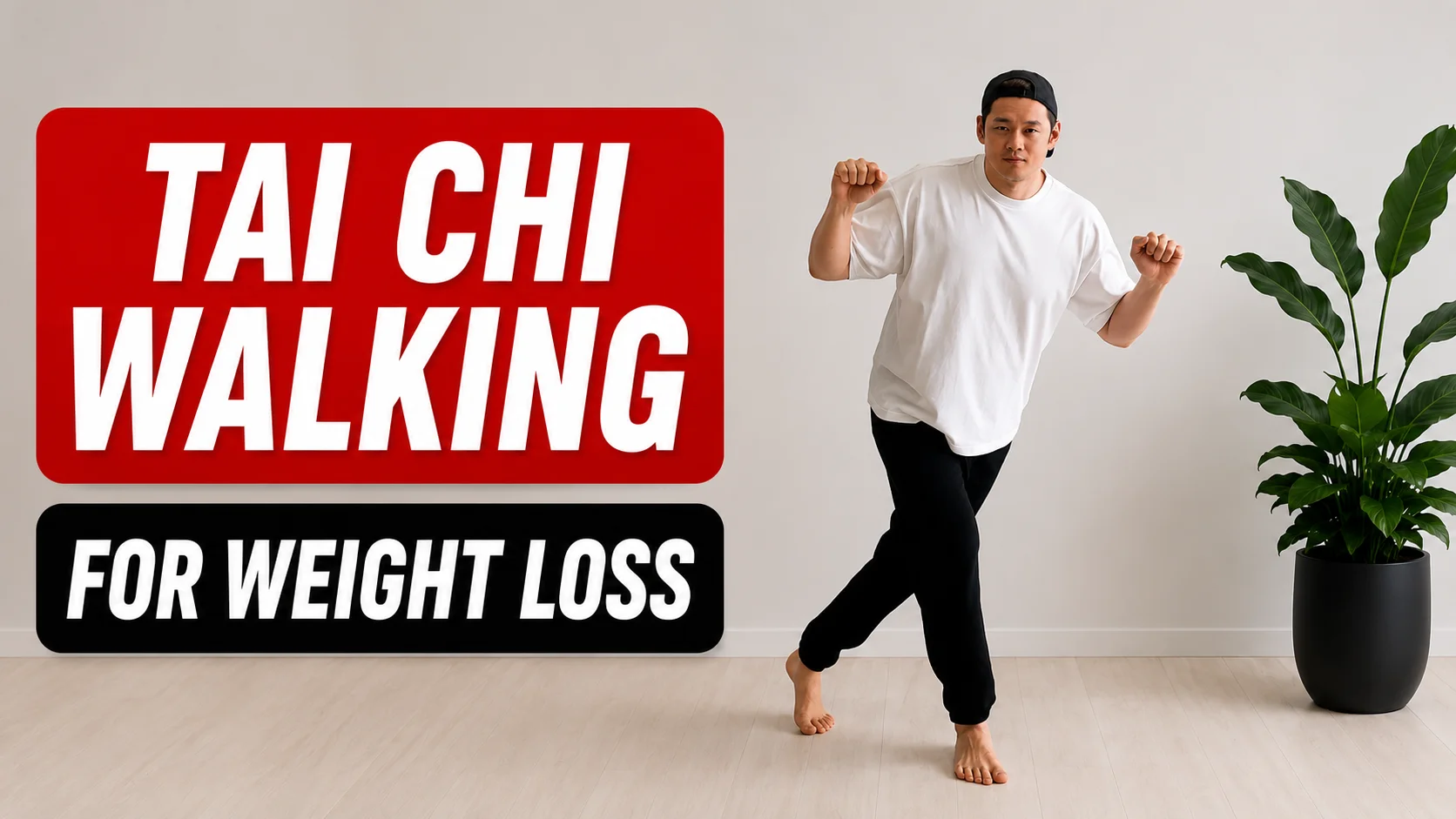
What Is Tai Chi Walking for Weight Loss?
Tai Chi walking for weight loss means using Tai Chi walking as one form of regular physical activity, not treating it as a special fat-burning technique.
The Tai Chi walking method discussed here was created primarily to train movement quality, foot awareness, weight transfer, structure, and body control.
It is not presented as a quick weight-loss system.
That distinction matters.
Can Tai Chi Walking Still Be Part of an Active Lifestyle?
Yes.
Tai Chi walking involves physical movement and can be practiced for longer periods once the technique becomes comfortable.
For someone who enjoys slow, deliberate exercise, it can be one way to add more movement to the day.
But there is no reason to turn Tai Chi walking into exaggerated claims about “melting belly fat” or dramatic calorie burning.
Its real value lies in the practice itself.
What Is Tai Chi Walking for Seniors?
Tai Chi walking for seniors uses the same basic Tai Chi walking principles but keeps the movements comfortable, controlled, and appropriate for the individual.
The central ideas remain the same:
keep the steps manageable, establish your support, move the empty foot carefully, and transfer your weight without rushing.
A senior does not need deep stances or long steps to practice these principles.
Shorter Steps Can Be Better
Trying to imitate someone else's stride is unnecessary.
Your step length should allow you to keep an upright structure and remain in control.
This principle is useful for beginners of any age.
The goal is not to prove how far you can step.
The goal is to understand where your weight is and how your body responds when you move it.
Safety Comes Before Technique
Practice on a clear, stable surface.
If balance is uncertain, practice near something secure that can provide support.
Do not force deep positions, extreme ranges of motion, or movements that feel unstable.
Tai Chi walking should become more natural over time, not more stressful.
What Does “Empty and Full” Mean in Tai Chi Walking?
Empty and full describe the relationship between the leg that is carrying your weight and the leg that is available to move.
If most of your weight is on your left leg, the left side is relatively full.
The right leg becomes relatively empty.
That means the right foot can move without forcing the body to fall forward.
Once the right foot is placed and your weight transfers onto it, the relationship reverses.
The right leg becomes full.
The left becomes empty.
This alternating relationship happens repeatedly during Tai Chi walking.
Why Should Beginners Practice Tai Chi Walking?
Tai Chi walking lets beginners experience Tai Chi principles without having to memorize a long form.
That makes it a useful entry point into the practice.
You can begin studying:
foot awareness;
weight transfer;
balance;
stride length;
upright posture;
relaxation;
coordination;
movement from the ground;
empty and full; and
mindful attention.
You are learning Tai Chi through the body rather than only learning choreography.
The source lesson makes the same broader point: Tai Chi walking is a tool for developing the experience of Tai Chi and does not require someone to master an entire system before they can begin practicing its principles.
Do You Have to Walk One Specific Way?
No.
There are different Tai Chi walking and stepping drills.
Different Tai Chi styles, teachers, and training goals may emphasize different foot placements, directions, depths, or movement patterns.
That is why it is more useful to understand the principle than to insist that one stepping drill is the only correct method.
The method is a training tool.
The body awareness you develop is the real goal.
How Long Should You Practice Tai Chi Walking?
Beginners do not need long sessions.
Start with enough time to make the movement feel deliberate.
Five or ten focused minutes may teach you more than rushing through a much longer practice without paying attention.
As the movement becomes more natural, you can practice longer sequences and explore different stepping patterns.
Quality comes first.
Frequently Asked Questions About Tai Chi Walking
Is Tai Chi walking the same as regular walking?
No.
Regular walking usually uses more automatic momentum, while Tai Chi walking deliberately separates foot placement from weight transfer.
Do you put your weight down with the foot?
Not immediately.
A central beginner principle is to place the moving foot lightly before gradually transferring your weight onto it.
Should Tai Chi walking steps be long?
Not necessarily.
Your stride should be short enough that you can maintain good structure and control without reaching or leaning.
Should I look at my feet when Tai Chi walking?
You may glance down when learning, but avoid spending the entire practice looking at your feet.
Keep your head up and develop awareness of the ground through the body as well as through your eyes.
Can I practice Tai Chi walking indoors?
Yes.
The movement can be practiced in a relatively small area because distance is not the main goal.
Is Tai Chi walking only for beginners?
No.
Beginners can use it to learn basic Tai Chi principles, while more experienced practitioners can use stepping drills to study structure, footwork, coordination, and more advanced movement.
Is there only one correct Tai Chi walking technique?
No.
Tai Chi includes different stepping methods and different training approaches.
The important part is understanding what the drill is teaching you.
The Bottom Line
Tai Chi walking is a deliberate stepping practice that teaches you to separate foot placement from weight transfer.
Instead of throwing your body forward, you establish support, move the empty foot, place it gently, connect with the ground, and then transfer your weight.
The practice looks simple, but that simplicity is exactly what makes it useful.
It gives you time to study your feet, ankles, legs, hips, waist, posture, balance, and attention without being distracted by a complicated Tai Chi form.
At Tai Chi Hub USA, we recommend thinking of Tai Chi walking as a way to experience the principles of Tai Chi directly through movement.
Start slowly.
Keep the step natural.
Stay upright.
Place the foot before loading it.
Then repeat.
That is where Tai Chi walking begins.